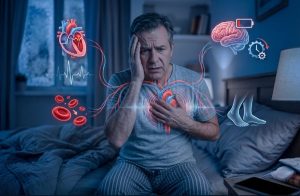
Most people know that dehydration can make you feel dizzy, tired, or give you a pounding headache. But far fewer realize that something as common as not drinking enough water could directly interfere with your heart’s electrical system and potentially trigger a dangerous arrhythmia known as atrial fibrillation (AFib).
If you or a loved one has been diagnosed with AFib or if you’re simply trying to protect your long-term heart health, understanding the link between hydration and heart rhythm is not optional; it’s essential.
What Is AFib?
Atrial fibrillation (AFib) is the most common serious heart rhythm disorder in the United States, affecting an estimated 2.7 to 6.1 million Americans. Under normal conditions, your heart beats in a coordinated rhythm. The upper chambers (atria) contract first, followed by the lower chambers (ventricles), allowing blood to flow efficiently.
- In AFib, the atria send rapid and chaotic electrical signals.
- Instead of contracting normally, the atria quiver irregularly.
- This disrupts normal blood flow and causes the ventricles to beat unevenly.
- The result is an irregular, often rapid heartbeat that can range from mild to life-threatening.
| AFib at a Glance | Key Detail |
| Type of Condition | Cardiac arrhythmia (irregular heart rhythm) |
| Chambers Affected | The atria (upper chambers of the heart) |
| Core Problem | Chaotic electrical signals prevent coordinated contraction |
| Heart Rate in AFib | Can reach 100–175 beats per minute |
| Primary Risk | Stroke — AFib increases stroke risk by 5x |
| Common Triggers | Dehydration, alcohol, stress, high blood pressure, and sleep apnea |
How Dehydration Affects the Heart
Your heart is a muscle, and like all muscles, it depends on a finely tuned internal environment to function properly. Blood is roughly 55% plasma a liquid made almost entirely of water. When you become dehydrated, plasma volume drops. This sets off a cascade of physiological changes, each of which places additional stress on the heart
| What Happens | Why It Happens | Effect on the Heart |
| Blood volume drops | Less fluid circulates through the vessels | The heart must pump harder to maintain output |
| Blood thickens | Fewer fluid molecules to dilute cells | Increased clot risk and sluggish circulation |
| Blood pressure falls | Less pressure in the vascular system | Heart rate increases to compensate |
| Electrolytes shift | Water loss disrupts mineral ratios | Electrical signals in heart cells destabilize |
| The nervous system activates | The body triggers a stress response | Adrenaline spikes, promoting irregular beats |
Each of these effects compounds the others. A heart that is already working harder, with thicker blood and destabilized electrical signals, is a heart primed for irregular rhythm.
Can Dehydration Trigger AFib?
The short answer is yes, and the evidence is compelling. The heart’s rhythm depends on precise electrical impulses generated and transmitted through cardiac cells. These cells are exquisitely sensitive to changes in their surrounding environment, particularly to shifts in electrolyte concentrations, which occur whenever the body loses significant fluid.
Dehydration-induced AFib is particularly common during:
- Extended outdoor exercise in heat (marathons, cycling, team sports)
- Prolonged illness involving vomiting or diarrhea
- Post-surgical recovery with inadequate IV fluid replacement
- Hot summer days without adequate fluid intake
- Excessive alcohol or caffeine consumption, both of which are diuretics
- Use of diuretic medications without proper hydration monitoring
Signs of Dehydration-Related AFib
One of the challenges with AFib is that its symptoms overlap significantly with those of dehydration itself, which means patients often don’t recognize that something more serious may be occurring. Understanding how to distinguish a simple dehydration headache from a potential AFib episode could literally save your life.
| Symptoms of Dehydration Alone | Red Flags: Possible AFib Episode |
| Dry mouth and increased thirst | Rapid or fluttering heartbeat (palpitations) |
| Decreased urine output | Irregular pulse — skipping or racing beats |
| Mild headache | Sudden shortness of breath at rest |
| Fatigue and low energy | Chest pain, pressure, or tightness |
| Muscle cramps | Lightheadedness or near-fainting |
| Dark yellow urine | Sudden and unexplained anxiety |
| Dizziness when standing | Weakness or fatigue disproportionate to activity |
Electrolytes and Heart Rhythm: The Mineral Connection
If dehydration is the trigger, electrolytes are the mechanism. These electrically charged minerals dissolved in your blood and cellular fluid govern every heartbeat. When their concentrations fall out of balance, the heart’s electrical system becomes erratic.
The four electrolytes most critical to cardiac rhythm are:
| Electrolyte | Role in Heart Rhythm | Normal Blood Level | Risk When Low |
| Potassium (K⁺) | Repolarizes heart cells after each beat | 3.5–5.0 mEq/L | AFib, ventricular arrhythmias |
| Sodium (Na⁺) | Initiates an electrical impulse in the SA node | 136–145 mEq/L | Fatigue, confusion, rhythm changes |
| Magnesium (Mg²⁺) | Stabilizes the cell membrane, regulates K⁺ and Ca²⁺ | 1.7–2.2 mg/dL | AFib, muscle spasms, palpitations |
| Calcium (Ca²⁺) | Triggers muscle contraction in heart cells | 8.5–10.5 mg/dL | Irregular contractions, heart block |
Simply “drinking more water” is not always sufficient after a significant fluid loss event. You need to replace the electrolytes, too, not just the volume.
How to Prevent AFib From Dehydration
Prevention is not complicated, but it does require consistency. The strategies below are grounded in clinical evidence and should be discussed with your cardiologist, especially if you have a prior history of AFib or other heart conditions.
1. Follow a Smart Daily Hydration Target
General guidelines recommend 8–10 cups (roughly 2–2.5 liters) of water per day for most adults, though your individual needs vary based on body size, activity level, climate, and medications. A practical rule: your urine should be pale yellow. Dark yellow or amber urine is a reliable sign of dehydration.
- Drink a glass of water first thing in the morning
- Set hourly reminders during busy workdays
- Increase intake by at least 500ml per hour of moderate exercise
- Avoid relying on thirst alone; it’s a lagging indicator, especially in older adults
2. Replenish Electrolytes, Not Just Fluids
After significant fluid loss from intense exercise, heat exposure, illness, or travel, plain water alone may not be enough. Include electrolyte-rich foods and drinks:
- Potassium: bananas, avocados, sweet potatoes, spinach, oranges
- Magnesium: dark leafy greens, almonds, pumpkin seeds, dark chocolate
- Sodium: moderate dietary salt (especially post-exercise, unless restricted by your doctor)
- Calcium: dairy products, fortified plant milks, broccoli, sardines
3. Know Your Medications and Their Impact
Several commonly prescribed medications significantly increase the risk of dehydration and electrolyte loss:
- Diuretics (“water pills”) are used for blood pressure and heart failure; they increase urinary output and deplete potassium and magnesium
- ACE inhibitors and ARBs can affect potassium levels
- Certain antiarrhythmic drugs require careful monitoring of electrolyte levels
If you are on any of these medications, your cardiologist should be monitoring your electrolyte levels with periodic blood tests. Never adjust your fluid or salt intake dramatically without consulting your provider first.
Avoid the Lifestyle Traps That Worsen Dehydration
| ❌ Avoid or Minimize | ✓ Better Alternatives |
| Alcohol (strong diuretic effect) | Water, herbal teas, diluted fruit juice |
| Excessive caffeine (coffee, energy drinks) | Moderate coffee + extra water to compensate |
| Salty processed foods (increase fluid demand) | Whole foods with natural sodium balance |
| Prolonged heat exposure without fluids | Hydrate before, during, and after heat exposure |
| Skipping meals during illness | Oral rehydration solutions (ORS) when sick |
When to See a Cardiologist
Whether you’ve been diagnosed with AFib and want to understand your triggers, are on diuretics or blood pressure medications and have never had your electrolytes tested, or experience frequent dehydration due to your occupation, sport, or health condition, this is the right place to start.
If you’ve been diagnosed with AFib, are on diuretics or blood pressure medications without ever testing your electrolytes, or frequently experience dehydration due to your lifestyle or health condition, you’re in the right place.
The Bottom Line
The connection is far more direct than most people realize. Dehydration disrupts blood volume, raises stress hormones, and throws off the delicate electrolyte balance that keeps your heart’s electrical system working properly.
For people with existing AFib or cardiovascular risk factors, inadequate hydration can be the difference between a normal day and an emergency room visit.The good news is that dehydration is one of the most preventable AFib triggers. Your heart works every second of every day. Don’t wait for the next episode, find out how Atlantic Cardiovascular supports your heart health. Give it the environment it needs to thrive safely.