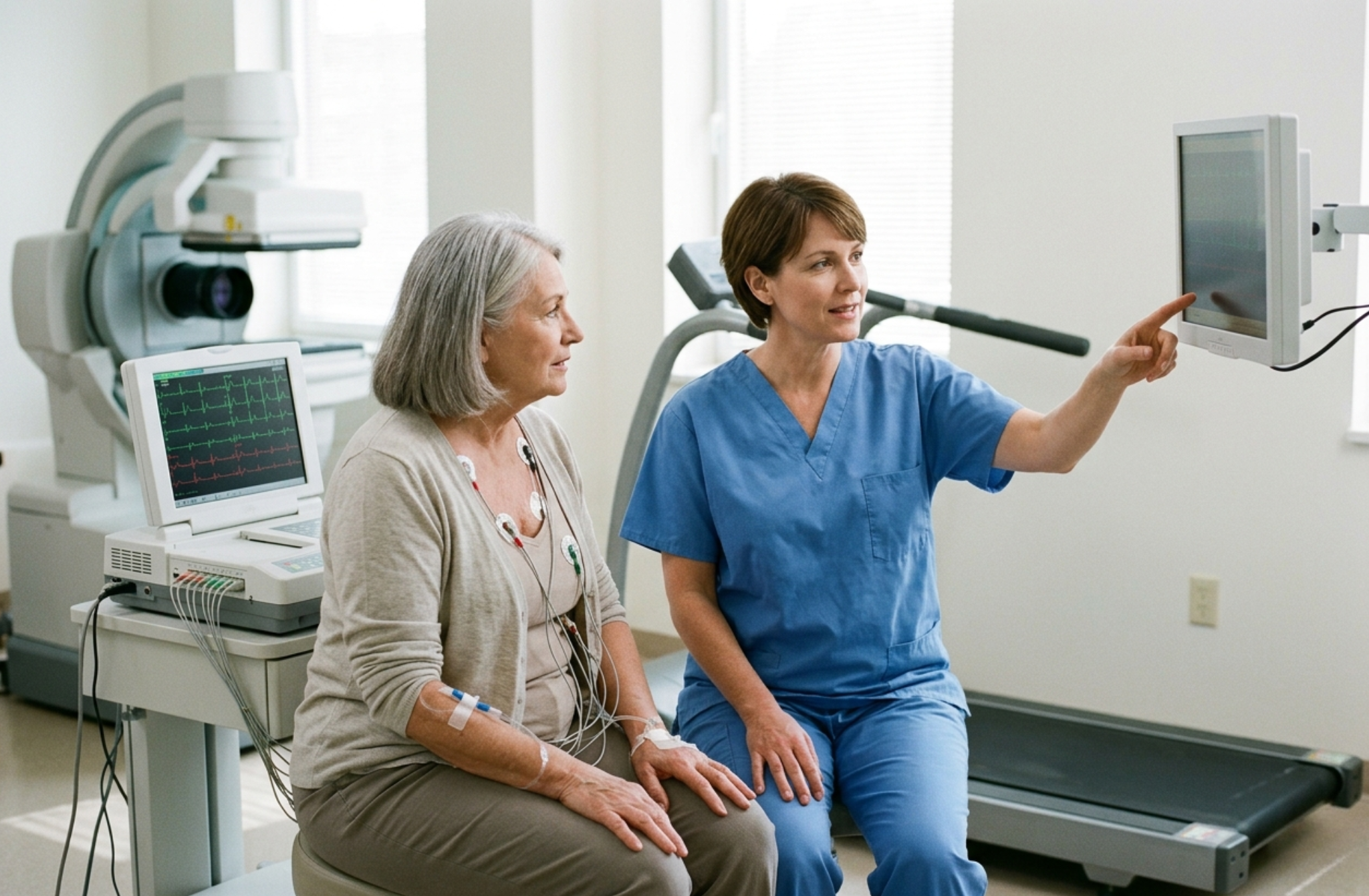
The word “nuclear” does a lot of psychological heavy lifting. In cardiology, however, it simply refers to the use of a radioactive tracer to produce images of blood flow, not a reactor, not weapons-grade material, and not a procedure that leaves lasting radiation in your body. Yet the fear is real, and it deserves a real answer rather than platitudes.
The actual safety question is more precise than it sounds: not whether a nuclear stress test carries any risk (it does), but whether that risk is clinically meaningful given what the test can detect. That distinction matters.
What Is a Nuclear Stress Test?
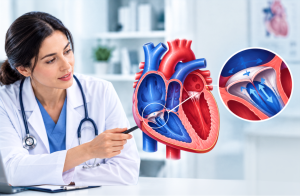
A nuclear stress test, formally called Myocardial Perfusion Imaging (MPI) maps the blood supply to your heart muscle using a radioactive tracer and a gamma camera. It is not a surgery, not a catheter procedure, and not an X-ray. It is an imaging study that reveals something no standard EKG or exercise stress test can: the actual perfusion pattern of your myocardium under both rest and stress conditions.
Silent ischemia, reduced blood flow without chest pain, is present in up to 30% of diabetic patients with CAD. A nuclear stress test detects it. Standard exercise Heart Stress Test has a sensitivity of only 68%. Nuclear stress testing reaches 85–90% sensitivity and over 90% specificity, according to data published in the Journal of the American College of Cardiology.
The Two-Phase Imaging Protocol
Every nuclear stress test follows a dual-acquisition protocol, with resting images acquired first, followed by stress images. Comparing the two maps reveals:
- Normal perfusion at rest AND stress → coronary arteries are clear
- Normal at rest, reduced under stress → ischemia (live but starved muscle, reversible with treatment)
- Reduced at rest AND stress → fixed defect, likely scarring from prior myocardial infarction
This three-way read is what makes the nuclear stress test clinically irreplaceable for patients undergoing intermediate-to-high-risk Coronary artery Disease Treatment evaluation, as no other non-invasive tool maps both rest and stress perfusion simultaneously.
How Does a Nuclear Stress Test Work?
The procedure runs in two sessions, typically 3 to 5 hours total, though some same-day protocols compress this further. Here is what actually happens inside the lab:
THE STEP-BY-STEP PROCEDURE
1. IV Access & Baseline Vitals: A peripheral IV is placed. Blood pressure, pulse, and a resting 12-lead EKG are recorded.
2. Resting Tracer Injection: Technetium-99m sestamibi (or Tc-99m tetrofosmin) is injected intravenously. The tracer binds to viable, perfused heart muscle cells in proportion to blood flow.
3. Resting Image Acquisition (SPECT): 15–30 minutes after injection, a SPECT gamma camera rotates 180° around the chest over 10–20 minutes, capturing 3D perfusion maps of the resting heart.
4. Stress Phase: Either treadmill exercise (Bruce protocol) or a pharmacological vasodilator (adenosine, regadenoson, dipyridamole) or inotropic agent (dobutamine) is used to increase coronary blood flow demand. Target heart rate is 85% of maximum predicted (220 minus age).
5. Stress Tracer Injection: At peak stress, a second dose of tracer is injected. Cells receiving adequate blood flow absorb it; ischemic zones do not.
6. Stress Image Acquisition: A second SPECT acquisition is performed. The two sets of images, rest vs. stress, are overlaid and compared by the reading cardiologist.
Is a Nuclear Stress Test Safe?
Yes, with important qualifications. Safety is not binary in medicine, and framing it that way does patients a disservice. The more useful framing is: safe relative to what, and for whom?
THE NUMBERS THAT DEFINE ITS SAFETY PROFILE
| Major complication rate | < 0.01% (< 1 in 10,000 procedures) — lower than colonoscopy |
| Serious arrhythmia rate | < 1% — all managed on-site with continuous cardiac monitoring |
| Fatal outcome rate | Estimated at 1 in 50,000 — comparable to treadmill exercise testing alone |
| Pharmacological agent reversal | Adenosine and regadenoson effects reversed within 60–90 seconds with aminophylline IV |
The risk of driving to the hospital for the test statistically outweighs the risk of the test itself for most patients. This is not hyperbole; it is the proportionality that trained cardiologists use when they assess procedural risk versus diagnostic value.
Risks of a Nuclear Stress Test: Complete Clinical Breakdown
| Side Effect / Risk | Incidence | Risk Level | What Actually Happens |
| Chest tightness/pressure (pharmacological) | 5–10% of patients | Moderate | Intentional response to vasodilator; resolves in under 5 minutes; antidote (aminophylline) on standby |
| Flushing, headache, dizziness | Up to 15% with adenosine | Low | Predictable vasodilatory effect; no intervention needed; self-limiting |
| Transient arrhythmia (SVT, AV block) | < 1% of patients | Low | Continuous EKG monitoring throughout; corrects spontaneously in most cases |
| Hypotension (low blood pressure) | 1–3% of patients | Low | Monitored in real time; resolves once the stress agent is stopped |
| Allergic reaction to radiotracer (Tc-99m) | < 0.01% of patients | Low | Emergency antihistamines and steroids are immediately available on-site |
| Serious cardiac event (MI, VF) | < 0.01% (1 in 10,000) | Low | AED, crash cart, and resuscitation team are present in all accredited labs |
| Radiation dose (Tc-99m protocol) | 100% of patients | Low | 9–12 mSv total; tracer half-life = 6 hours; cleared within 24–48 hrs |
Nuclear Stress Test Side Effects: Honest and Specific
Side effects cluster into two categories depending on whether exercise or pharmacological stress is used. The distinction matters because pharmacological protocols affect a broader range of physiological systems.
With Pharmacological Stress (Adenosine / Regadenoson / Dobutamine)
These agents work precisely because they dilate coronary arteries — but they also affect blood vessels and nerve receptors systemically. The following are not complications; they are expected, temporary physiological responses:
- Chest heaviness or pressure (5–10%) caused by coronary vasodilation, not ischemia; resolves in < 5 minutes
- Facial flushing and warmth are adenosine-mediated peripheral vasodilation; no treatment needed
- Dyspnea (shortness of breath), bronchoconstriction risk with adenosine; dobutamine is used instead for asthmatics
- Palpitations or rapid heartbeat, especially with dobutamine; heart rate is the intended target
- Headache (up to 35% with adenosine) most common side effect; it resolves within minutes of stopping the infusion
- Nausea is less common; it typically resolves without intervention
With Treadmill Exercise Stress
Side effects are the same as ordinary vigorous exercise: muscle fatigue, breathlessness, sweat, and transient elevation in blood pressure. There are no tracer-related side effects unique to exercise protocols beyond what the tracer itself causes.
Radiation Exposure: The Data Without the Spin
Radiation concern is legitimate and deserves data, not dismissal. The effective dose from a nuclear stress test is real, but context makes it interpretable.
What 9–12 mSv Actually Means
The International Commission on Radiological Protection (ICRP) sets an annual occupational dose limit of 20 mSv/year for radiation workers. A one-time nuclear stress test delivers roughly half that annual limit in a single session. That sounds significant until you compare it to the procedures already considered routine in cardiology:
| Radiation Source | Effective Dose | Clinical Context |
| Annual US Natural Background Radiation | 3 mSv/year | Everyone receives this passively |
| Mammogram | 0.4 mSv | Ordered annually for screening |
| Chest X-Ray | 0.1 mSv | 90× lower than a nuclear stress test |
| Transatlantic Flight (London–NYC) | 0.08 mSv | Perspective: even flying adds a dose |
Low-Dose Protocols Are Now Available
Advanced centers using cadmium-zinc-telluride (CZT) solid-state detector cameras can achieve diagnostic-quality perfusion imaging at doses as low as 2–4 mSv — a 60–75% reduction from standard protocols. Stress-first, rest-only protocols (skipping the rest scan when stress images are normal) further reduce dose. Ask your center which protocol they use.
Specific Populations That Warrant Extra Discussion
Not every patient is an ideal candidate. Who benefits most and who needs a modified approach depends on clinical history, comorbidities, and what your cardiologist is trying to rule out. If you’re still weighing whether this procedure applies to you, our Nuclear Stress Test full-service page walks through candidacy in detail.
| ✔ Well-Suited Candidates | ⚠ Requires Special Consideration |
| • Stable chest pain under evaluation • Prior heart attack (assessing residual damage) • Pre-op cardiac clearance for high-risk surgery • Asymptomatic patients with multiple CAD risk factors • Post-revascularization follow-up (stent/bypass graft) • Inconclusive standard stress test results | • Active pregnancy defer unless clinically urgent • Breastfeeding suspends feeds for 24–48 hrs post-tracer • Severe asthma or COPD: Adenosine contraindicated; use dobutamine • Known hypersensitivity to radiotracer agents • Recent caffeine intake (< 12 hrs) blocks the pharmacological effect • Theophylline or dipyridamole use requires a pre-test hold |
Preparation: What Reduces Your Personal Risk
The safest nuclear stress test is one that is correctly prepared for. The most preventable adverse events are related to pharmacological stress, false-positive results, or exaggerated hemodynamic responses; they are preparation failures, not procedure failures.
| Preparation Step | Timing | Why It Matters |
| Avoid caffeine | 12–24 hours before | Coffee, tea, energy drinks, and chocolate — all included |
| Hold beta-blockers | As directed by the physician | Metoprolol and atenolol may blunt the heart rate response |
| Stop theophylline/aminophylline | 24–48 hours before | Blocks adenosine receptors; invalidates pharmacological stress |
| Fast (no heavy meals) | 4 hours before imaging | Light meals are acceptable; prevents nausea from pharmacological agents |
| Wear comfortable clothes | Day of procedure | Treadmill exercise may be required; avoid tight clothing |
| Arrange a driver (if sedated) | Day of procedure | Some pharmacological protocols can cause transient fatigue |
Conclusion
A nuclear stress test is not something to fear; it is something to understand. The word “nuclear” carries cultural weight that the clinical reality simply does not support. What this procedure actually delivers is one of the most precise, non-invasive windows into your heart’s blood supply available in modern cardiology: high sensitivity, a well-documented safety profile, and actionable results that can catch silent ischemia before it becomes a heart attack.
If your cardiologist has recommended this test, the evidence strongly supports that the diagnostic value outweighs the procedural risk for the vast majority of patients. And if you still have questions about whether you’re a candidate, what your results might mean, or what comes next, the team at Atlantic Cardiovascular is equipped to walk you through every step with the clinical precision this conversation deserves.
FAQS
Q1: Can I drive myself home after a nuclear stress test?
In most cases, no. Pharmacological protocols can cause transient fatigue or mild dizziness afterward, so most labs recommend arranging a driver for the day of the test.
Q2: How soon will I get my results, and who interprets them?
A board-certified nuclear cardiologist reviews your SPECT images and generates a formal report, typically within 24 to 72 hours.
Q3: Does insurance typically cover a nuclear stress test?
Most major insurance plans, including Medicare, cover it when ordered for a documented medical indication such as chest pain or CAD follow-up.
Q4. Is a nuclear stress test safe for the elderly?
Generally, yes, low radiation is safe for most older adults, with staff monitoring throughout. Those who can’t walk on a treadmill can receive medication to simulate heart stress instead.
Q5. How long does a nuclear stress test take?
Typically, 3–5 hours total, including two rounds of imaging (rest and stress) with waiting periods in between.
Q6. Why would a doctor order a nuclear stress test?
To investigate chest pain, shortness of breath, or abnormal test results, and to evaluate blood flow through the heart muscle at rest and under stress.