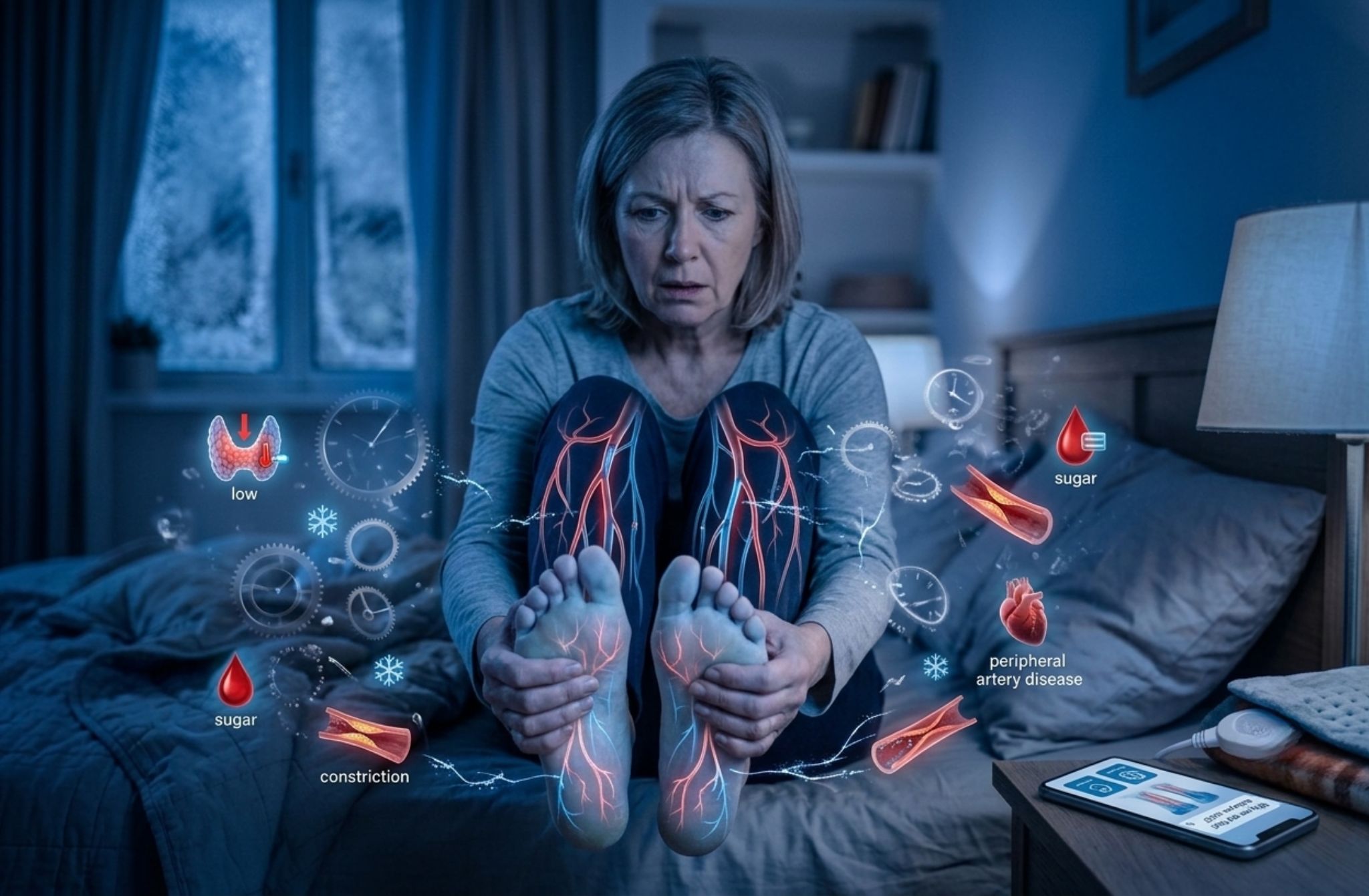
You slip on thick socks, curl up under a blanket, and your feet still feel like ice. If this happens often, you are not imagining it, and you are not alone. Cold feet are one of the most common complaints patients bring up in casual conversation, yet most people never mention it to a doctor.
Sometimes cold feet are nothing more than a normal response to a chilly room. Other times, they are one of the earliest physical clues that blood is not reaching your feet the way it should. We see patients regularly whose first sign of a circulatory issue was simply feet that never seemed to warm up. You get to know about the most common causes, the symptoms worth watching, and the steps you can take starting today.
What Causes Cold Feet?
Cold feet happen when less warm blood reaches the tissue in your feet, or when nerve signals related to temperature are disrupted. The cause can be as simple as your environment or as significant as an underlying vascular condition. Below are the most frequent contributors clinicians look at first.
Your body naturally prioritizes blood flow to vital organs like the heart, lungs, and brain, especially in cold conditions. Because the feet sit at the very end of the circulatory system, they are often the first area to feel the effects when blood flow is redirected or restricted, whether the cause is temporary or ongoing.
- Cold environments or air conditioning, which naturally cause blood vessels to constrict
- Sitting or standing still for long periods, reducing blood flow to the lower legs
- Low body weight or a thin layer of fat, which offers less natural insulation
- Smoking or nicotine use, which tightens blood vessels and reduces circulation
- Anxiety or stress, which can trigger the body’s blood-flow “fight or flight” response
- Underlying medical conditions, including vascular disease, diabetes, and thyroid disorders.
Occasional cold feet after a walk outside in winter is expected. Feet that stay cold indoors, day after day, deserve a closer look.
Why Are My Feet Always Cold Even With Socks?
If warm socks and blankets are not solving the problem, the issue is likely happening beneath the skin rather than on the surface. Socks trap heat, but they cannot force blood to travel into tissue that is not receiving adequate circulation.
This is one of the clearest signals that something other than room temperature is at play. When insulation stops working, the more likely explanations include:
- Narrowed or partially blocked arteries limiting blood delivery to the feet
- Nerve damage that changes how temperature is sensed or regulated
- Reduced heart pumping efficiency, which lowers blood flow to the extremities first
- Chronic low blood pressure, which can leave the feet under-supplied with blood
If socks, blankets, and warm rooms no longer help, it is worth having your circulation formally evaluated rather than continuing to layer up.
Can Poor Circulation Cause Cold Feet?
Yes. Poor circulation is one of the single most common reasons feet stay cold, and it is the reason vascular specialists take the complaint seriously. Your feet sit farther from your heart than almost any other part of your body, which makes them the first place to feel it when circulation slows down.
Blood carries both oxygen and warmth. When arteries narrow, or blood vessels lose flexibility, less of that warm, oxygen-rich blood reaches your toes, even though the rest of your body may feel perfectly comfortable.
This is why circulation-related cold feet often show a pattern: the coldness is persistent rather than occasional, it does not resolve quickly with warmth or movement, and it frequently appears alongside other subtle changes in the skin, nails, or sensation. Even though the rest of your body may feel perfectly comfortable. If this pattern sounds familiar, our PAD diagnosis and management services can help identify the cause.”
| Normal Circulation | Poor Circulation |
| Feet feel warm to the touch, similar to hands | Feet feel noticeably cooler than hands or the rest of the body |
| Skin color stays consistent and pink | Skin may look pale, bluish, or reddish-purple |
| Feet warm up quickly after activity or a warm room | Feet stay cold despite movement, socks, or warmth |
| No pain, numbness, or tingling | Numbness, tingling, or aching may accompany the coldness |
What Medical Conditions Can Cause Cold Feet?
A number of medical conditions are known to interfere with blood flow, nerve signaling, or the body’s temperature regulation, and each can leave the feet feeling cold. The table below summarizes the conditions most frequently linked to this symptom.
| Condition | How It Leads to Cold Feet |
| Peripheral Artery Disease (PAD) | Plaque buildup narrows the arteries that carry blood to the legs and feet, reducing flow and warmth. |
| Diabetes | High blood sugar over time can damage both blood vessels and nerves in the feet. |
| Raynaud’s Phenomenon | Small blood vessels spasm and narrow in response to cold or stress, sharply cutting circulation. |
| Hypothyroidism | A slower metabolism can lower overall body temperature and blood flow to the extremities. |
| Anemia | A lower red blood cell count reduces the oxygen and warmth blood can deliver to tissue. |
| Peripheral Neuropathy | Nerve damage, often from diabetes, can disrupt normal temperature sensing in the feet. |
| Venous Insufficiency | Weakened vein valves can affect overall blood flow patterns in the legs and feet. |
Many of these conditions are manageable once identified, which is why an evaluation is worthwhile rather than something to put off. In several cases, such as PAD or diabetes-related nerve damage, catching the condition early can significantly change the long-term outlook and reduce the risk of complications like foot ulcers or amputation. For vein-related circulation issues, explore our varicose vein treatment options
Who Is Most at Risk for Circulation-Related Cold Feet?
Cold feet can affect anyone, but certain factors make circulatory causes more likely. Knowing where you fall on this list can help you decide how quickly to schedule an evaluation.
| Risk Factor | Why It Matters |
| Age over 50 | Arteries naturally stiffen and narrow with age, reducing blood flow efficiency. |
| Smoking history | Nicotine constricts blood vessels and accelerates artery damage over time. |
| Diabetes | Elevated blood sugar damages both vessels and nerves in the feet. |
| High blood pressure or cholesterol | Both contribute directly to plaque buildup in the arteries. |
| Family history of vascular disease | Genetics can increase your baseline risk for PAD and related conditions. |
| Sedentary lifestyle | Limited movement reduces natural circulation to the lower legs and feet. |
What Symptoms Can Occur Along With Cold Feet?
Cold feet rarely travel alone when a medical condition is involved. Paying attention to accompanying symptoms can help you and your provider determine whether the cause is circulatory, neurological, or something else entirely.
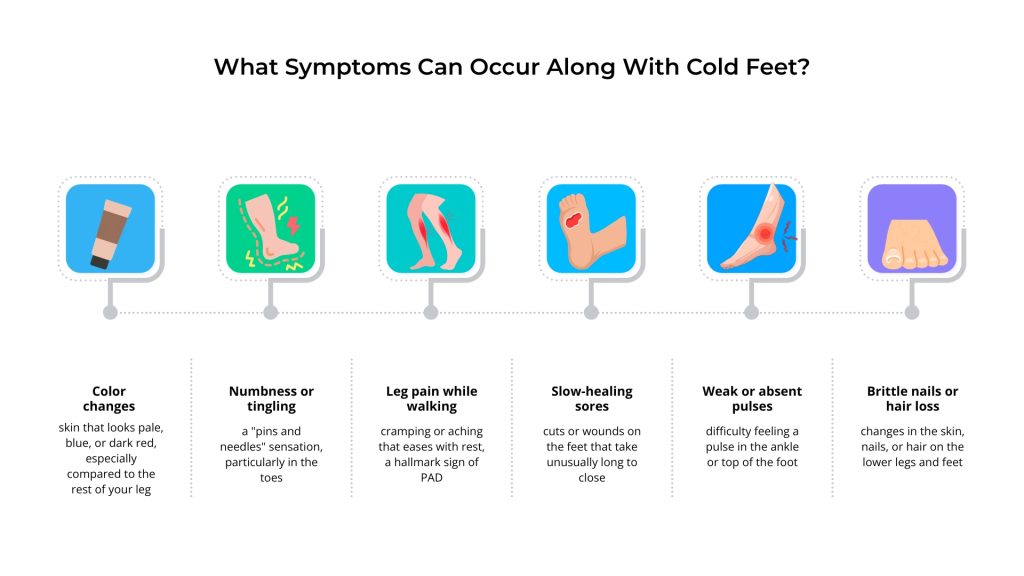
- Color changes: skin that looks pale, blue, or dark red, especially compared to the rest of your leg
- Numbness or tingling: a “pins and needles” sensation, particularly in the toes
- Leg pain while walking: cramping or aching that eases with rest, a hallmark sign of PAD
- Slow-healing sores: cuts or wounds on the feet that take unusually long to close
- Weak or absent pulses: difficulty feeling a pulse in the ankle or top of the foot
- Brittle nails or hair loss: changes in the skin, nails, or hair on the lower legs and feet
How Can You Improve Circulation in Cold Feet?
Improving circulation is often a combination of daily habits and, when needed, medical treatment. These steps are the ones vascular specialists most commonly recommend to patients working to support healthier blood flow.
- Move regularly. Walking, ankle circles, and calf raises help pump blood back toward the heart.
- Quit smoking. Nicotine constricts blood vessels and is one of the most significant, reversible risk factors.
- Manage blood sugar. Keeping diabetes well controlled protects both blood vessels and nerves.
- Stay hydrated. Adequate fluid intake helps maintain healthy blood volume and flow.
- Elevate your legs. Resting with legs raised periodically can support venous return.
- Wear compression socks. Gentle, graduated pressure can encourage blood flow back up the legs.
- Manage cholesterol and blood pressure. Both directly affect artery health over time.
- Lifestyle changes are usually paired with medical management, and sometimes angioplasty stent procedures to restore healthier blood flow.
How Can You Warm Up Cold Feet at Home?
For everyday cold feet that are not linked to a medical condition, a few simple habits can bring quick relief. These tips are meant for comfort, not as a substitute for evaluating a persistent underlying cause.
- Soak feet in warm, not hot, water for 10–15 minutes
- Wear moisture-wicking socks instead of cotton, which can trap dampness and cool the skin
- Choose roomy, well-insulated footwear rather than tight shoes that restrict blood flow
- Do a few minutes of light movement, like marching in place, to get blood circulating
- Avoid crossing your legs for long periods, which can compress blood vessels
- Try a warm foot massage to stimulate local blood flow
If these steps only bring temporary relief and the coldness returns quickly, the underlying cause is likely more than just a chilly house.
Conclusion
Cold feet might seem like a minor inconvenience, but as this guide shows, they can also be one of the earliest signals your body sends when circulation isn’t working the way it should. Paying attention to patterns how often it happens, whether warmth helps, and what other symptoms show up alongside it can make the difference between catching a vascular issue early and letting it progress unnoticed. You don’t have to figure this out on your own.
The team at Atlantic Cardiovascular specializes in diagnosing and treating the underlying causes of poor circulation, from PAD to venous insufficiency, with personalized care built around your specific symptoms. If your feet have felt cold more often than not, reach out today and take the first step toward better vascular health.
FAQs
Q1. Is it normal to have cold feet even in the summer?
Occasional cold feet in air-conditioned spaces can be normal. However, if your feet feel cold regardless of the season or room temperature, it is less likely to be purely environmental and more worth discussing with a provider.
Q2. Can cold feet appear before diabetes is officially diagnosed?
Yes. Circulatory and nerve changes can begin before blood sugar levels are formally diagnosed as diabetic, which means cold feet can sometimes be an early clue worth investigating with routine bloodwork.
Q3. Are cold feet more common in men or women?
Cold feet are reported more frequently by women, partly due to hormonal differences that affect blood vessel constriction, though men can experience it just as seriously, particularly in connection with PAD.
Q4. Can stress or anxiety alone cause cold feet?
Yes. Stress activates the body’s fight-or-flight response, which redirects blood away from the extremities toward core organs. This effect is usually temporary and resolves once stress levels come down.
Q5. Should I be concerned if only one foot feels cold?
One-sided coldness is generally a stronger warning sign than both feet being cold, since it often points to a localized blockage or blood flow issue on that side rather than a general circulation pattern.
Q6. Can certain medications make feet feel colder?
Some medications, including beta-blockers and certain migraine or blood pressure drugs, can narrow blood vessels as a side effect. If cold feet began after starting a new medication, mention it to your prescribing provider.