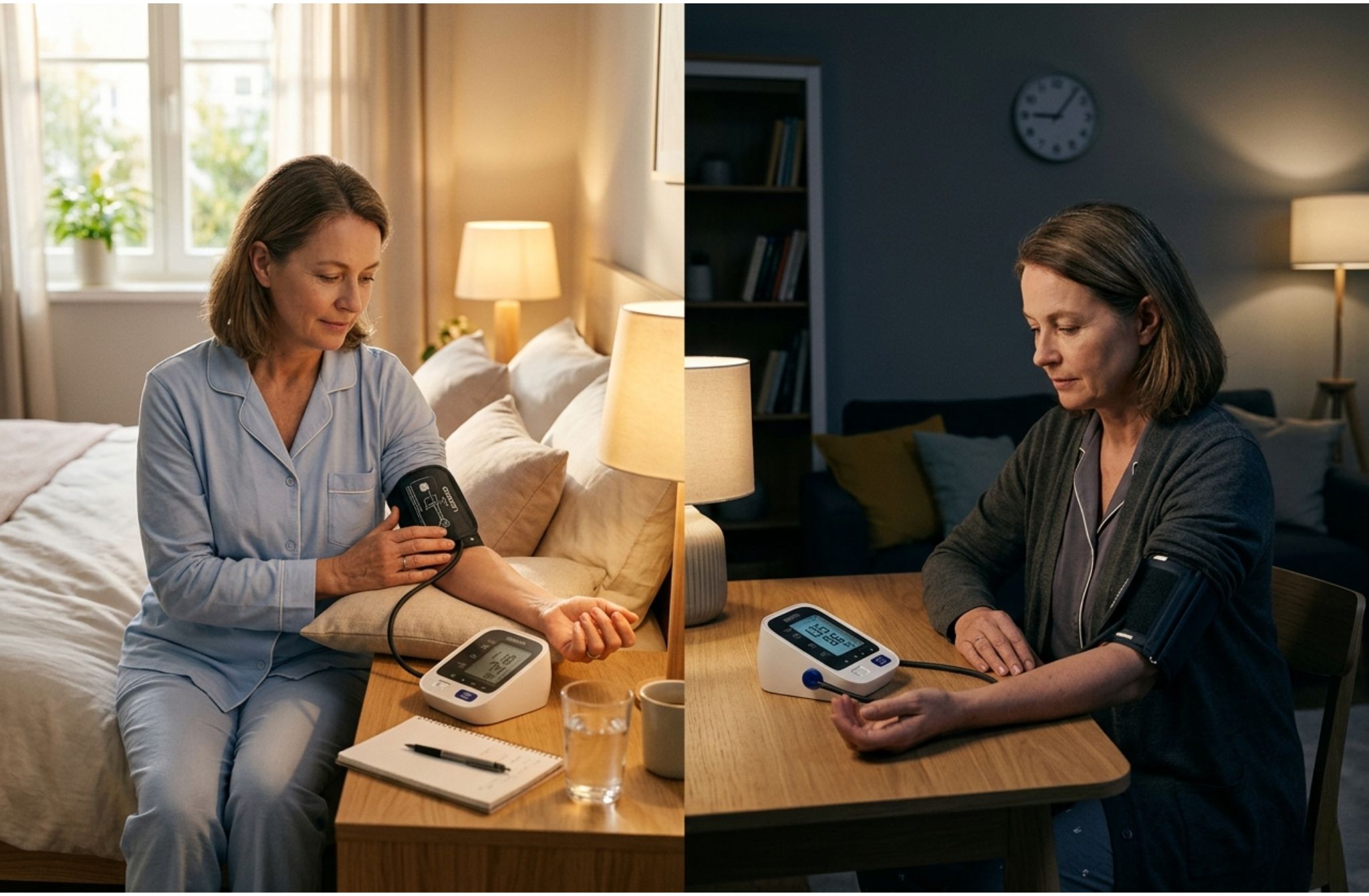
Blood pressure is not a fixed number. It rises and falls throughout the day in a rhythmic pattern that your body is designed to follow. For millions of people, understanding why their blood pressure reading at 7 AM looks different from the one taken before bedtime is a source of confusion and sometimes unnecessary worry.
At Atlantic Cardiovascular, we believe that an informed patient is an empowered patient. This guide breaks down the science behind morning versus nighttime blood pressure, what normal looks like at each time of day, and, critically, when fluctuations cross from normal physiology into dangerous territory.
Understanding Blood Pressure Rhythms: The Basics
Your blood pressure follows a pattern called the circadian rhythm — a roughly 24-hour biological cycle that governs everything from sleep to hormone release. Blood pressure obeys this rhythm closely.
In healthy individuals, blood pressure tends to:
- Be at its lowest during deep sleep (typically 2–3 AM)
- Begin rising sharply 1–2 hours before waking
- Peak in the late morning (around 9–11 AM)
- Dip slightly in the early afternoon
- Rise again in the early evening
- Fall progressively as nighttime approaches
This pattern exists because your body prepares for activity in the morning by releasing stress hormones, primarily cortisol and adrenaline, that increase heart rate and constrict blood vessels. Understanding this cycle is the first step in interpreting your own readings accurately.
What Is Normal Morning Blood Pressure?
Morning blood pressure is defined as the readings taken within the first hour of waking, before eating, exercising, or taking any medication. This window is medically significant because it captures the blood pressure surge that accompanies your body’s transition from rest to activity.
Normal Morning Blood Pressure Ranges
The following table outlines standard blood pressure categories as they apply to morning readings, based on American Heart Association (AHA) and European Society of Cardiology (ESC) guidelines:
| Category | Normal Morning BP | Normal Nighttime BP | Status |
| Optimal | < 120/80 mmHg | < 110/70 mmHg | Healthy |
| Normal | 120–129 / <80 mmHg | 105–115 / 65–75 mmHg | Acceptable |
| Elevated | 130–139 / 80–89 mmHg | 120–129 / 75–85 mmHg | Monitor |
| High (Stage 1) | 140–159 / 90–99 mmHg | 130–139 / 85–89 mmHg | Consult Doctor |
| High (Stage 2) | ≥ 160/100 mmHg | ≥ 140/90 mmHg | Urgent Care |
Morning readings tend to run 5–10 mmHg higher than afternoon readings, even in healthy individuals. This is expected and normal.
Why Morning Blood Pressure Runs Higher
Several physiological mechanisms drive the morning blood pressure surge:
- Cortisol Release: The ‘stress hormone’ cortisol peaks in the early morning hours, signaling the body to increase vascular tone.
- Catecholamine Surge: Adrenaline and noradrenaline rise sharply upon waking, increasing both heart rate and vascular resistance.
- Physical Transition: Moving from horizontal sleep to vertical standing increases blood pressure due to gravitational changes in blood distribution
- Platelet Aggregation: Blood is naturally more prone to clotting in the morning, which contributes to why heart attacks and strokes peak between 6 AM and noon.
Is Blood Pressure Naturally Lower at Night?
Yes, and this nighttime dip is not just normal; it is protective. During sleep, the parasympathetic nervous system (your ‘rest and digest’ system) becomes dominant, reducing the output of stress hormones and slowing the heart rate. As a result, blood pressure typically drops 10–20% below daytime levels.
This dip is sometimes called the nocturnal dip, and it plays a crucial role in giving your heart and blood vessels a chance to rest and repair. People who experience this dip are known as dippers, and research consistently shows they have better long-term cardiovascular outcomes than those who do not.
Dipping Patterns and What They Mean
Cardiologists classify nighttime blood pressure behavior into four distinct patterns:
| Dipping Pattern | Nighttime Drop | Risk Level | What It Means |
| Normal Dipper | 10–20% drop | Low | Healthy cardiovascular pattern |
| Extreme Dipper | > 20% drop | Moderate | Possible over-medication or low BP episodes |
| Non-Dipper | < 10% drop | High | Linked to organ damage, stroke risk |
| Reverse Dipper | BP rises at night | Very High | Strong predictor of cardiovascular events |
Non-dippers and reverse dippers face significantly elevated risks of heart failure, stroke, kidney disease, and left ventricular hypertrophy. If you are on antihypertensive medication, your doctor may consider shifting doses to the evening to improve nighttime dipping.
Morning vs Night Blood Pressure: The Full Comparison
Now that we understand each period in isolation, let us compare them directly. This is the core of the morning vs night blood pressure debate, and the comparison reveals important differences in what each reading tells you about your cardiovascular health.
| Factor | Morning BP | Nighttime BP |
| Typical Reading | Higher (surge on waking) | Lower (dip during sleep) |
| Primary Driver | Cortisol, adrenaline, activity | Parasympathetic nervous system |
| Cardiovascular Risk | Higher (peak attack window) | Lower in healthy individuals |
| Ideal Drop from Day | N/A | 10–20% dip (Dippers) |
| Concern Pattern | Morning hypertension surge | Non-dipping / reverse dipping |
| Best Measurement Time | Within 1 hr of waking | 30 min before bed |
Neither reading is more important than the other in isolation. The pattern of how blood pressure changes between morning and night is what cardiologists are most interested in. A single high morning reading is less concerning than a consistent pattern of elevated morning readings combined with poor nighttime dipping.
Why Blood Pressure Changes During the Day
Blood pressure variability throughout the day is driven by a complex interplay of biological, behavioral, and environmental factors. Understanding these drivers helps you interpret your own readings in context.
Biological Factors
- Hormonal cycles: Cortisol, aldosterone, and adrenaline all follow 24-hour cycles that directly influence vascular tone.
- Heart rate variability: The autonomic nervous system continuously adjusts heart rate and output based on body position, activity, and stress.
- Kidney function: Sodium and water balance managed by the kidneys fluctuate throughout the day, affecting blood volume and pressure.
- Vascular compliance: Blood vessel elasticity changes with temperature, hydration, and activity levels.
Behavioral Factors
- Physical activity: Exercise raises blood pressure acutely but lowers it over the following hours through a phenomenon called post-exercise hypotension.
- Caffeine consumption: Coffee and tea can raise blood pressure by 5–10 mmHg for up to 3 hours.
- Meals: Blood pressure may drop slightly after eating as blood flow is redirected to the digestive system.
- Stress and emotion: Acute stress reliably raises blood pressure through adrenaline release.
- Alcohol: While a drink may acutely lower BP, regular alcohol consumption raises long-term blood pressure significantly.
Environmental Factors
- Temperature: Cold weather constricts blood vessels and raises pressure; heat dilates them.
- Altitude: Higher altitudes reduce oxygen availability, prompting the body to increase blood pressure.
- Noise and disrupted sleep: Chronic noise exposure during sleep raises blood pressure and impairs the nocturnal dip.
Morning Hypertension Explained
Morning hypertension is a specific and clinically important condition in which blood pressure is disproportionately high upon waking, typically defined as a morning home reading of 135/85 mmHg or above, or an office reading of 140/90 mmHg or above.
It is not simply ‘high blood pressure in the morning.
It refers specifically to an exaggerated morning surge that goes beyond the expected physiological rise. Heart attacks are 40% more likely to occur between 6 AM and noon. If you are experiencing morning chest discomfort or exertion-related symptoms, a Heart Stress Test can help evaluate how your heart responds under cardiovascular load.
Who Is Most at Risk?
- People with sleep apnea: Repeated hypoxic episodes overnight cause sustained sympathetic nervous system activation.
- Diabetics: Autonomic neuropathy disrupts normal BP regulation during sleep.
- Elderly individuals: Age-related stiffening of arteries exaggerates the morning surge.
- People on short-acting antihypertensives: Medication may wear off overnight, allowing BP to rebound.
- Smokers and heavy drinkers: Both habits increase sympathetic tone and blunt the nocturnal dip.
- Those with chronic kidney disease: Impaired sodium regulation leads to volume-dependent hypertension.
Why Morning Hypertension Is Particularly Dangerous
The morning hours are the most dangerous window for cardiovascular events.
Research published in leading cardiology journals has confirmed that:
- Heart attacks are 40% more likely to occur between 6 AM and noon than at any other time of day.
- Strokes peak between 6 AM and 8 AM.
- Sudden cardiac death follows a similar morning peak pattern.
Morning hypertension amplifies these already elevated risks by adding hemodynamic stress to a period when blood is already more prone to clotting, and vessels are under increased strain from the natural cortisol surge.
When Blood Pressure Fluctuations Become Dangerous
Not all blood pressure variability is dangerous. The key is distinguishing normal physiological fluctuation from pathological patterns that require medical attention.
Warning Signs That Should Not Be Ignored
- Morning BP consistently above 135/85 mmHg at home: This meets the threshold for morning hypertension and warrants medical evaluation.
- Sudden, severe morning headache: Can indicate a hypertensive crisis, particularly if accompanied by vision changes or confusion.
- BP rising at night instead of falling: Reverse dipping is one of the strongest predictors of adverse cardiovascular events.
- More than 20 mmHg difference between morning and evening readings: Large variability is an independent cardiovascular risk factor.
- BP above 180/120 mmHg at any time of day: This is a hypertensive crisis requiring immediate medical attention.
- Symptoms accompanying BP spike: Chest pain, shortness of breath, sudden weakness, facial drooping, or speech difficulty alongside elevated BP demands emergency care.
Best Time to Measure Blood Pressure
When you measure your blood pressure matters as much as the reading itself. To get clinically useful data, you need to measure at the right times, under the right conditions, and in the right way.
| Measurement Time | When to Take It | Conditions | Why It Matters |
| Morning | Within 1 hr of waking | Before meds, food, or coffee | Captures morning surge; standard for diagnosis |
| Evening | 30 min before bed | After 5 min rest | Reveals nighttime trends and non-dipping |
| Both (HBPM) | Morning + Evening | Twice a day, 7 days | Gold standard for home monitoring |
| Ambulatory (24-hr) | Wearable device all day | Prescribed by doctor | Most comprehensive; detects white coat hypertension |
For the most comprehensive view of your blood pressure and heart rhythm over a full day and night cycle, a Holter Monitor Test provides continuous cardiac data that a single clinic reading simply cannot capture.
When to See a Cardiologist
While home monitoring is valuable, it is not a substitute for professional evaluation. Contact Atlantic Cardiovascular or seek medical care if:
- Your morning readings are consistently at or above 135/85 mmHg at home
- You notice your nighttime readings are equal to or higher than your daytime readings
- You experience morning headaches, nausea, vision changes, or shortness of breath
- Your blood pressure shows large variations (over 20 mmHg) between different times of day
- You have risk factors such as diabetes, kidney disease, or a family history of stroke or heart disease
- You are pregnant; morning hypertension in pregnancy requires immediate evaluation
Conclusion
The comparison of morning vs night blood pressure reveals something that a single clinic reading never can: the full story of how your cardiovascular system behaves across the entire 24-hour cycle. A normal morning BP surge is part of healthy physiology. A nocturnal dip is a sign of a heart and vascular system that is functioning as it should.
But when morning readings climb too high, when the nighttime dip disappears, or when readings spike at unexpected times, these are signals worth taking seriously. Early detection, consistent home monitoring, and a proactive partnership with your cardiovascular care team are the most powerful tools at your disposal.
FAQs
Q1. What time of day is blood pressure lowest and highest?
Blood pressure is usually lowest during sleep at night and highest in the morning and early afternoon after waking and daily activity.
Q2. Is blood pressure more accurate in the morning or at night?
Morning readings are often preferred for consistency, but checking at both morning and evening gives the most accurate picture overall.
Q3. Can dehydration affect blood pressure readings?
Yes. Dehydration can temporarily lower blood pressure and may also cause dizziness, rapid heart rate, or inaccurate home readings if you are not properly hydrated.
Q4. Does lack of sleep raise blood pressure?
Poor sleep quality or sleeping fewer than 6 hours regularly can increase blood pressure and reduce the healthy nighttime dip your heart needs.
Q5. Can anxiety cause temporary high blood pressure?
Yes. Stress and anxiety can trigger short-term spikes in blood pressure due to adrenaline release, even in people without chronic hypertension.